

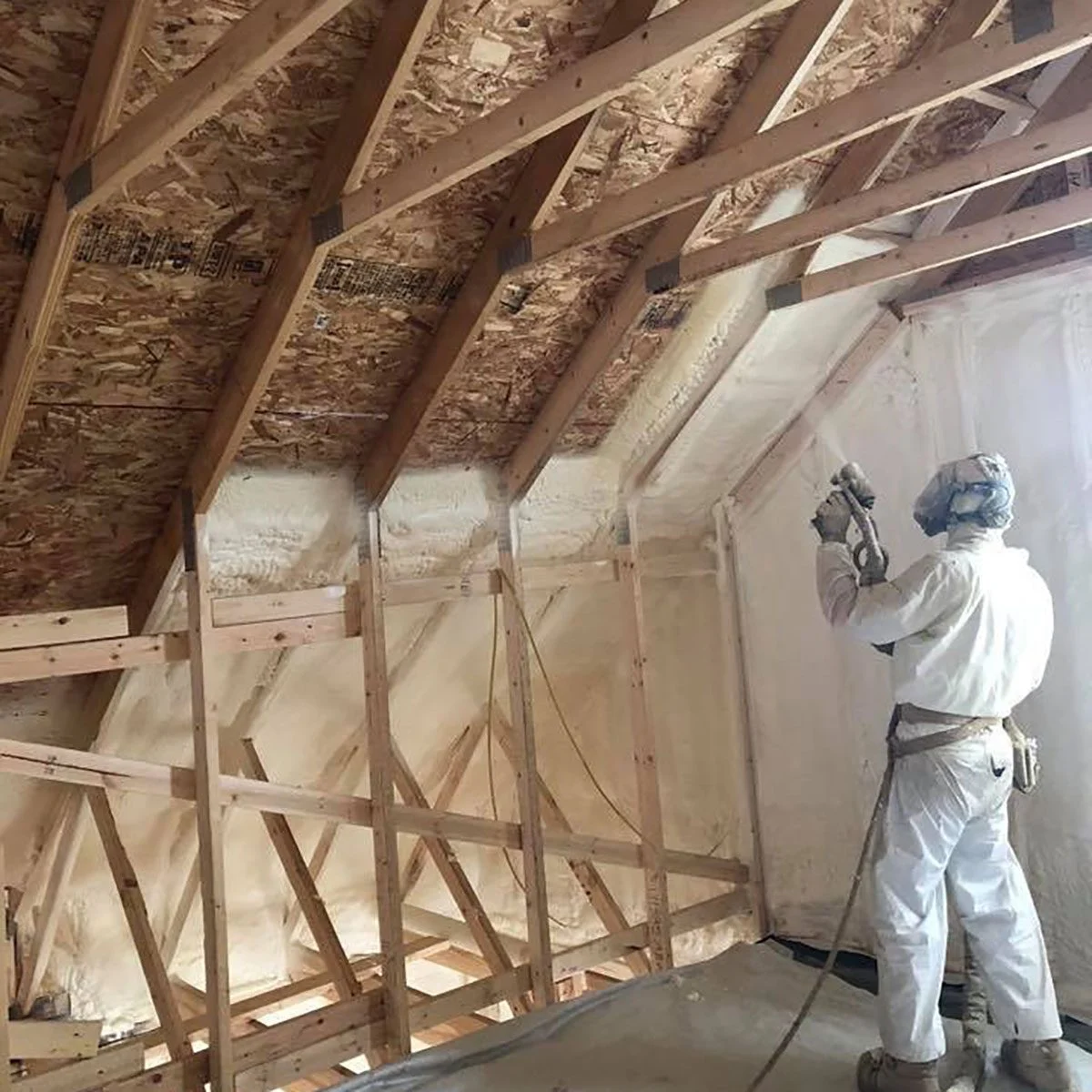
Spray foam insulation has earned a reputation as one of the most effective ways to improve a home’s thermal performance. By expanding and sealing gaps on contact, it creates an airtight barrier that’s difficult for traditional insulation materials to match. It’s particularly popular in Central Texas homes where extreme heat and humidity make energy efficiency and comfort a year-round priority.
While spray foam offers some major advantages – like turning your attic into a conditioned space and keeping temperatures more consistent – it also comes with trade-offs. Understanding both sides of the equation will help you decide if spray foam is the right fit for your home.
Advantages of Spray Foam Insulation
1. Creates a Conditioned Attic Space
One of the most significant benefits of spray foam is that it’s applied directly to the roof deck instead of the attic floor. This effectively moves your home’s thermal boundary to the roofline, meaning the attic is now inside the “conditioned” part of your home.
- Ductwork and HVAC equipment in the attic now operate in a much cooler, more stable environment.
- Seasonal temperature swings in the attic are dramatically reduced, which helps your HVAC system work less and last longer.
2. Consistent Comfort Throughout the Home
Because spray foam seals air leaks and insulates at the same time, it minimizes drafts and prevents hot or cold spots. You get a more uniform temperature from room to room, even in areas that are far from the thermostat.
3. High R-Value and Air Sealing in One Step
Traditional insulation materials like fiberglass or cellulose only slow heat transfer – they don’t stop air movement. Spray foam combines insulation and air sealing in a single application, giving you higher energy performance for the same space.
4. Reduces Dust, Pollen, and Outdoor Air Infiltration
By sealing gaps, spray foam limits the entry points for allergens and pollutants, which can help improve indoor air quality.
The Downsides of Spray Foam Insulation
1. Changes Your Home’s Heat Load
When you install spray foam, you significantly alter the way your home holds and transfers heat. Your HVAC system may have been sized for a “vented attic” design – meaning a system sized for higher heating and cooling demands. Once spray foam is installed, that load decreases. If your HVAC system isn’t adjusted, you may see short cycling, humidity issues, or less-than-ideal performance.
2. “Science Experiment in a Can”
Spray foam’s performance depends heavily on correct installation. If the mix ratio, temperature, or application technique is off, you can end up with foam that doesn’t cure properly, emits odors, or fails to insulate as intended. Unlike fiberglass batts, you can’t just “fluff it back up” – fixing bad foam often means full removal, which is costly and invasive.
3. Gas Appliance Venting Requirements
When you change your attic from a vented to an unvented (conditioned) space, building code requires any gas-burning appliances in that space to be upgraded to sealed combustion with non-metallic (PVC) venting. Traditional metal flue pipes are designed for vented attics – in a sealed attic, they can cause dangerous backdrafting of combustion gases into the home.
4. Moisture Management Becomes More Critical
A tightly sealed home is great for energy efficiency, but without proper ventilation, moisture from cooking, bathing, and daily living can get trapped. Over time, excess humidity can lead to mold growth or material damage. With spray foam, you may need to add mechanical ventilation or a whole-home dehumidifier to keep indoor humidity in check.
When Spray Foam Makes Sense
Spray foam is often worth the investment if:
- You have HVAC equipment or ductwork in your attic.
- You’re planning to stay in your home long enough to see energy savings offset the higher upfront cost.
- You’re working with a trusted contractor experienced in spray foam application.
- You’re prepared to address ventilation, moisture control, and any appliance upgrades that might be required.
Bottom Line
Spray foam insulation can dramatically improve your home’s comfort and energy efficiency while creating a more stable environment for your HVAC system. But it’s not a “set it and forget it” solution – it changes how your home handles heat, airflow, and moisture. The best results come from pairing spray foam with the right HVAC adjustments, proper ventilation, and careful installation from a reputable professional.