

Introduction
Is your home trying to tell you something? That strange smell or sudden allergy flare-up might be more than just a seasonal nuisance. Your HVAC system, while crucial for comfort in Central Texas, could be harboring an unwelcome guest: mold. While not always obvious, mold leaves behind several telltale signs that every homeowner should know. Ignoring these warnings can lead to serious health issues and costly repairs. Let’s explore how to spot them before they become significant problems.
1. That Unmistakable Musty Smell: Trust Your Nose
Your sense of smell is often the first and most reliable indicator of mold. Mold has a distinct odor that many describe as “earthy,” “stale,” or like “wet cardboard.”
- What to Notice:
- A damp, musty odor when your system turns on.
- The smell is strongest near vents, suggesting ductwork involvement.
- The odor persists even after airing out rooms.
- Pro Tip: Pay attention to where the smell is most prominent. This can help professionals pinpoint the problem area.
2. Visual Clues: Spotting Mold Growth
While mold often hides in inaccessible areas, it can sometimes be visible. Knowing where to look can help you catch it early.
- Where to Look:
- What You Might See:
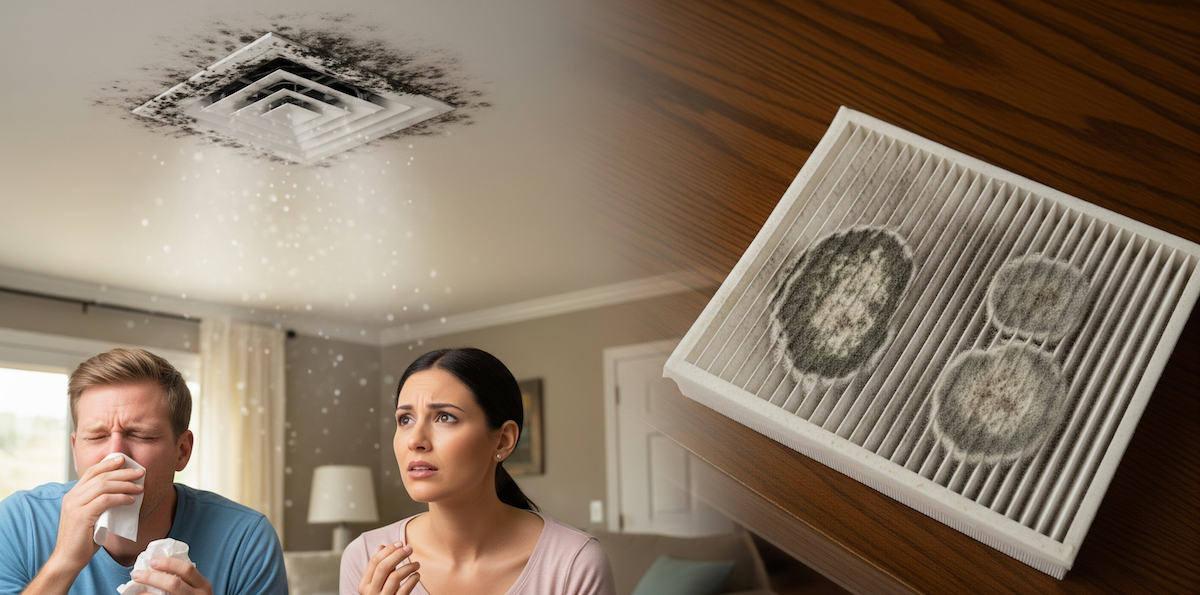
- Dark spots or patches (black, dark green, or even white).
- Fuzzy growths or slimy textures.
- Discolored areas that look like dirt but won’t wipe away easily.
- Pro Tip: Use a flashlight to inspect vents and accessible areas. Check both supply (blowing air out) and return (pulling air in) vents. If you see it, avoid touching it directly without proper protection.
3. The Allergy Connection: Is Your Home Making You Sick?
Mold releases microscopic spores into the air, which can trigger allergic reactions and respiratory symptoms in sensitive individuals.
Key Features
- Watch for These Symptoms (especially if new or worsening):
- Sudden increase in sneezing, coughing, or wheezing.
- Persistent stuffy or runny nose, itchy or watery eyes, sore throat.
- Skin rashes or irritation.
- The Telltale Pattern: Pay special attention if symptoms:
- Get noticeably worse when the HVAC system is running.
- Improve significantly when you’re away from home for a few hours or days.
- Affect multiple family members simultaneously.
- Seem worse in certain rooms.
4. Moisture: Mold’s Best Friend (and Your HVAC’s Enemy)
Mold needs moisture to thrive. Any signs of unwanted water in or around your HVAC system are major red flags.
- Red Flags to Watch For:
- Water droplets or condensation constantly forming on or around vents.
- Puddles or wet spots near your indoor HVAC unit.
- Damp spots or discoloration on walls or ceilings near where ducts run.
- Excessive condensation on windows and other surfaces within your home.
- Standing water in the drain pan that doesn’t clear, or an overflowing drain pan.
- Pro Tip: Regularly check your system’s drain pan and condensate line, especially during heavy AC use in our humid Central Texas summers. A properly functioning system should efficiently drain water and stay relatively dry.
5. Filter Findings: A Window into Your Air Quality
Your HVAC filter is designed to capture airborne particles, but it can also offer clues about mold.
Consider upgrading to a higher MERV rating filter for better particle capture (consult an HVAC pro first).
- Warning Signs:
- Filters that become visibly dirty much faster than usual.
- You notice dark spots, streaks, or a fuzzy appearance on the filter itself.
- A distinct musty smell emanating from a recently changed or dirty filter.
- The filter feels damp or shows signs of moisture.
- Best Practices:
- Check your HVAC filters monthly.
- Replace disposable filters or clean reusable ones as needed (typically every 1-3 months).
Taking Action: Your Mold Prevention & Remediation Plan
If you suspect mold, swift, professional action is crucial to protect your home and your family’s health.
- Immediate Steps If You Suspect Mold:
- Turn Off Your HVAC System: Prevents further circulation of mold spores.
- Document All Signs: Take photos and note symptoms.
- Contact HVAC Professionals: Call experts specializing in HVAC systems and mold assessment.
- Consider Air Quality Testing: Professionals can conduct testing to confirm mold presence.
- Long-Term Prevention (After Addressing the Immediate Problem):
- Regular HVAC Maintenance: Schedule professional tune-ups twice yearly to ensure proper drainage and clean coils.
- Prompt Leak Repair: Address any plumbing or roof leaks immediately.
- Proper Humidity Control: Maintain indoor humidity between 30-50% using your HVAC system and dehumidifiers.
- Regular Filter Changes: Adhere to a strict schedule for replacing or cleaning filters.
- Professional Duct Cleaning: When mold is present in ducts, professional cleaning may be needed.
The Bottom Line: Don’t Wait!
Don’t wait for multiple signs to appear, or for symptoms to become severe. If you notice any of these warnings, especially in combination, it’s time to act. Mold problems only get worse with time, potentially leading to expensive structural damage and chronic health issues. Catching them early can save you significant money and stress down the road.
Remember: Your HVAC system should contribute to your health, not compromise it. When in doubt, have it checked out by a qualified professional.