
A common frustration for many homeowners, especially here in Central Texas, is trying to achieve comfortable temperatures throughout their entire house with just one thermostat. One room might be stifling hot, another surprisingly chilly, while others feel perfectly fine. This imbalance often leads to wasted energy and constant thermostat battles. This is precisely why a zoned HVAC system has become such a valuable solution.
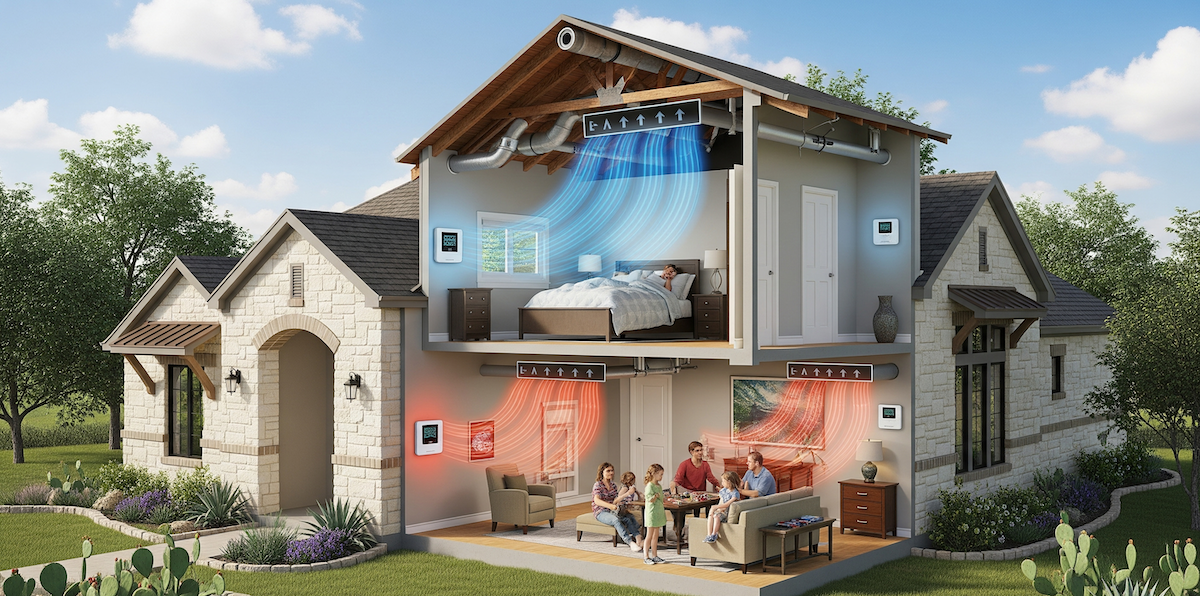
A zoned system is a method of dividing your home into different “zones,” where the temperature in each area can be individually controlled. Instead of relying on one central thermostat to manage the entire home, a zoned system uses multiple thermostats and motorized dampers within the ductwork to precisely manage airflow and temperature in specific sections.
Think of it like the lighting in your home. You wouldn’t use one light switch to control every light in the house, so why treat your heating and cooling system the same way? With a zoned system, each area of the house can be adjusted separately to meet different needs and preferences. This is especially useful in larger homes, multi-story houses, or homes where different rooms are used at different times of the day. For example, you might want the main living area cooler during the day, the bedrooms perfectly chilled for sleeping at night, and perhaps a guest room maintained at a more moderate temperature when unoccupied.
How a Zoned HVAC System Works: Smart Distribution, Single System
A key benefit of a zoned HVAC system is that it still operates from a single HVAC unit, meaning you won’t need to install multiple, separate heating and cooling systems in your Central Texas home. Instead, it provides unparalleled, customized temperature control over different sections of the house using advanced components that work in harmony with your existing central unit. Here’s a breakdown of the key elements involved:
- Thermostats for Each Zone: Each designated zone in your home has its own dedicated thermostat. These thermostats function just like a regular one, allowing you to set and monitor the temperature, but they only control the climate for their specific area. For example, a thermostat in the living room might control only that space, while another in the master bedroom controls that room independently.
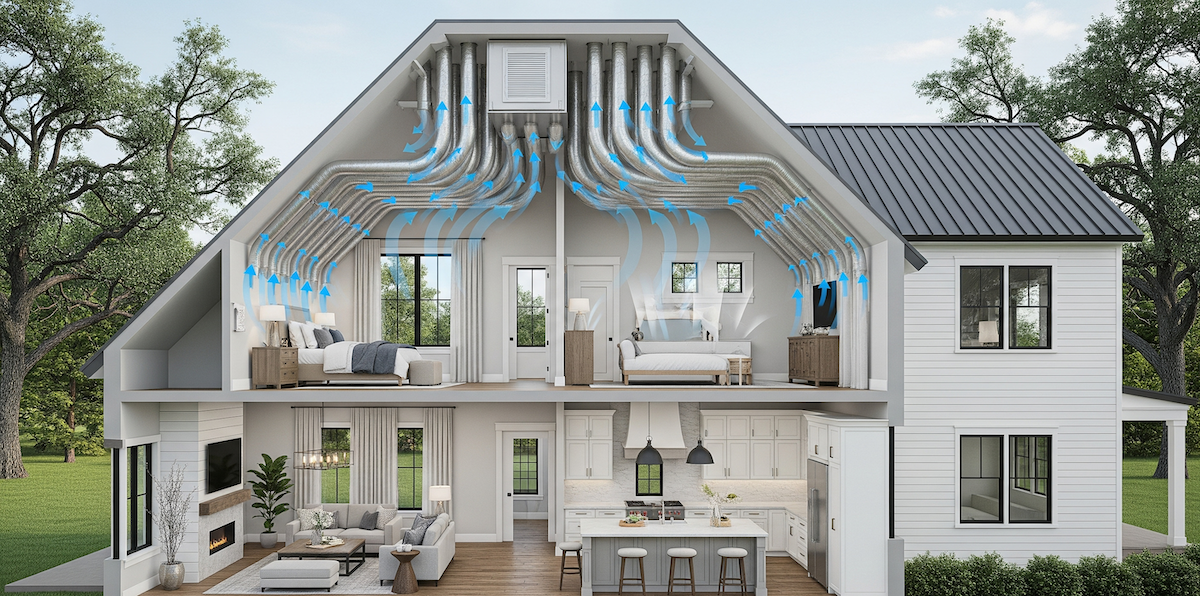
- Motorized Dampers in the Ductwork: Inside your home’s existing duct system are motorized dampers. These are essentially adjustable gates that open and close to direct or restrict the flow of conditioned air to the different zones of the house. When a thermostat in a particular zone “calls” for heating or cooling, the dampers for that specific zone open to allow conditioned air to flow through. If that zone reaches its desired temperature, or if another zone doesn’t need air, the corresponding dampers will close, stopping air from reaching that zone and redirecting it elsewhere.
- Control Panel – The System’s Brain: The control panel serves as the “brain” or central command center of the zoned system. It continuously takes signals from all the individual thermostats throughout the house and intelligently decides which zones need air and how much. It then sends commands to open and close the appropriate dampers to deliver conditioned air precisely where it’s needed, while also directing the main HVAC system to operate accordingly.
- Bypass Duct: Sometimes, only one or a few zones will call for heating or cooling while the rest of the home is already at the desired temperature. This can create excess air pressure within the ductwork, which could reduce efficiency, create noise, or even potentially damage your HVAC system. A bypass duct is an optional, but often recommended, component that relieves this excess pressure by allowing some air to be gently redirected back to the return side of the system, helping it to function smoothly and efficiently without over-pressurizing.
Components of a Zoned HVAC System
Here’s the breakdown of the key players:
- Thermostats: Placed in each zone; control temperature for that area.
- Motorized Dampers: Installed in ducts; open/close to direct airflow.
- Control Panel: Central hub; communicates with thermostats and controls dampers.
- Ductwork: Your home’s existing ducts, integrated with dampers.
- Bypass Duct: Pressure relief for the system.
How a Single HVAC System Becomes a Multi-Zone Solution
A fundamental aspect of a zoned system is that it does not require multiple, separate HVAC units for different parts of your home. Instead, it works by intelligently controlling where the conditioned air from your existing central HVAC system goes. Your primary furnace or air conditioner still generates the heating or cooling as it normally would. The brilliance of the zoned system is that it directs this air far more efficiently by sending it only to the zones that need it.
For instance, if only one zone in your house (say, the master bedroom at night) needs cooling, the main HVAC system will activate, but the motorized dampers will ensure that only that particular zone receives air. Dampers to other zones will remain closed, keeping those parts of the home at their current temperature without wasting energy conditioning them. This way, the system operates based on specific demand from individual zones rather than wastefully conditioning the entire house at once.
The zoning system doesn’t increase your HVAC unit’s overall capacity, but it dramatically maximizes the efficiency of how the air is distributed throughout your home. This allows a single, properly sized HVAC system to effectively manage temperature control across multiple zones without overworking itself or under-serving any particular area, leading to superior comfort and energy savings in your Central Texas home.