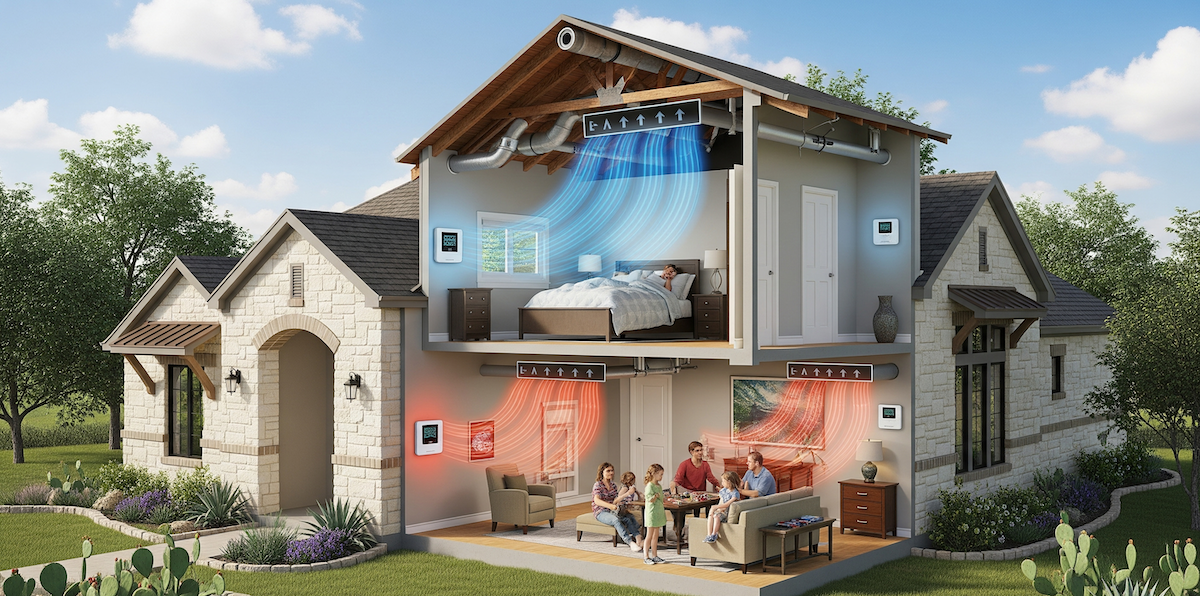


Designing a zoned HVAC system is more complex than it might initially seem. The concept of controlling different areas of your home with individual thermostats sounds straightforward, but the technical execution behind it is anything but simple. There are several factors to consider when implementing a zoned system, and getting these details right is critical for ensuring proper functionality, efficiency, and comfort.
Balancing Airflow and Static Pressure
One of the key challenges in a zoned system is managing the airflow when only one or a few zones are calling for heating or cooling. HVAC systems are designed to move a certain amount of air through the ductwork based on the size and capacity of the system. If the system is designed for the whole house, but only one or two zones are calling for air, the remaining zones are essentially “shut off” due to closed dampers. This creates an issue where the system is now pushing the same volume of air through fewer ducts, resulting in higher static pressure in the ductwork.
Static pressure is essentially the resistance that the air encounters as it moves through the ducts. If the pressure becomes too high, it can:
- Cause damage to the duct system over time.
- Lead to inefficiencies, as the system struggles to deliver air where it’s needed.
- Make the HVAC system work harder than it should, potentially shortening its lifespan.
- Increase noise, as the air moves through the ducts at a higher velocity than intended.
Because of this, balancing the airflow for each zone becomes very tricky. When only a small portion of the duct system is open, the HVAC unit needs to adjust how much air it is pushing through. This is why a single-stage HVAC system (which only operates at one speed or capacity) is not ideal for zoning. A single-stage system will push the same amount of air through the ducts whether one zone or all zones are open, resulting in overblown air, high static pressure, and inefficient temperature control.
Why You Need a Two-Stage or Inverter HVAC System
To do zoning properly, a two-stage or inverter HVAC system is highly recommended. These systems can adjust their capacity and air output based on the demand from the zones, rather than operating at full blast all the time.
- Two-stage systems operate at two levels: high capacity when the system needs to heat or cool the whole house, and low capacity when only a few zones are calling for air. This helps reduce static pressure, as the system won’t push as much air when only a couple of zones are active.
- Inverter systems offer even more flexibility by continuously adjusting the system’s capacity to match the exact demand in real time. This allows for precise temperature control and optimal airflow regardless of how many zones are calling for air.
Both of these systems are much better suited for zoning because they can throttle back the amount of air they push through the ductwork, preventing excess pressure and maintaining comfort in the active zones without wasting energy.
Space Requirements in the Attic
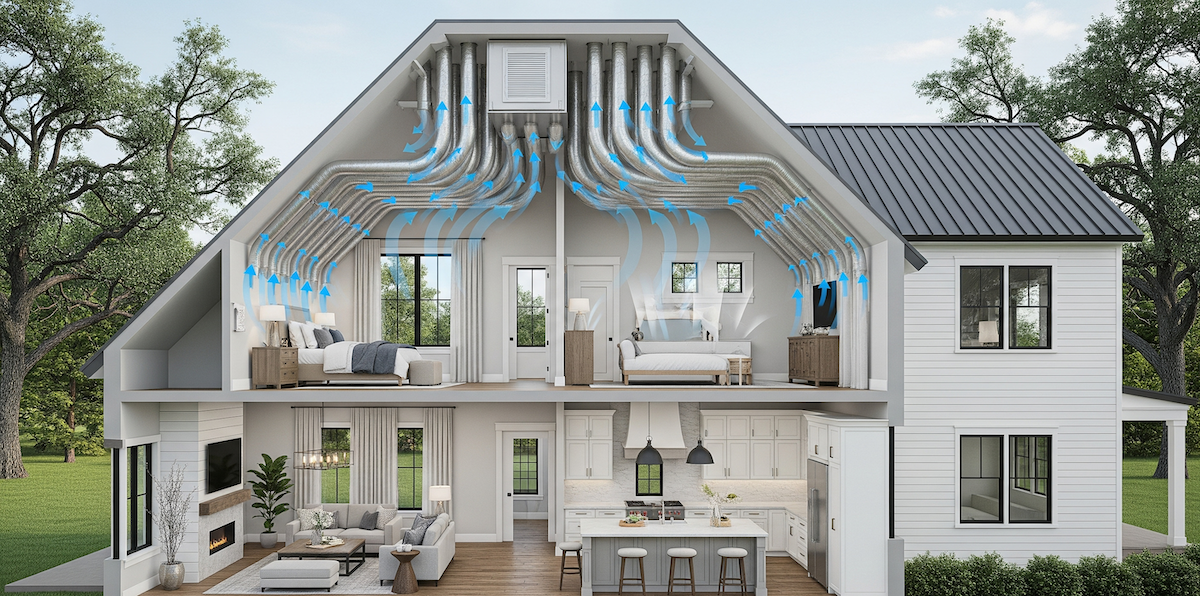
Another challenge with designing a zoned system is the space required to accommodate the additional ductwork and dampers. Zoning a home requires installing multiple thermostats and motorized dampers within the duct system, which means more equipment needs to be placed in your attic or basement. If your attic is cramped or your home wasn’t designed with a zoned system in mind, fitting all the components can become a real problem.
In particular:
- Ductwork design needs to account for multiple pathways to each zone. If only one or two zones are calling for air, the other pathways must be closed off by the dampers, and the system needs enough ductwork space to handle this complexity.
- Bypass ducts may be required to relieve excess air pressure when only a small number of zones are active. This adds even more ducting to an already tight attic space.
- Motorized dampers need space to be installed within the ductwork, and these dampers are not small. They also require access for future maintenance.
Without enough space, designing an efficient and functional zoned system becomes difficult, if not impossible.
The Problem with Single-Stage HVAC Systems
As mentioned earlier, single-stage systems are not well-suited for zoned HVAC systems. Because they can only operate at one capacity, a single-stage system will always push the same amount of air, regardless of how many zones are calling for air. If only one or two zones are calling, this can result in:
- Overcooling or overheating the zones that are active, as too much conditioned air is delivered to a smaller area.
- High static pressure, which leads to the system straining to push air through a smaller portion of the ductwork. Over time, this can cause wear and tear on the system.
- Inconsistent comfort, as the system struggles to maintain the right temperature in active zones.
- Excess noise, as too much air moves through fewer ducts.
This makes the system inefficient and can even cause long-term damage to both the ductwork and the HVAC unit.
Dialing in Static Pressure
Managing and maintaining the right level of static pressure is critical for a zoned system to function properly. Too much pressure can damage the ductwork, cause noise, and make the HVAC system less efficient. Properly balancing the system to handle the different demands of each zone, while keeping static pressure within an acceptable range, is a tricky process.
A professional HVAC technician must take into account:
- The size and layout of each zone.
- How much air each zone requires.
- The capacity of the HVAC system.
- The location and number of dampers.
- The inclusion of bypass ducts to relieve excess pressure when necessary.
Getting all of this right is crucial for the system to operate efficiently and effectively.