

Introduction
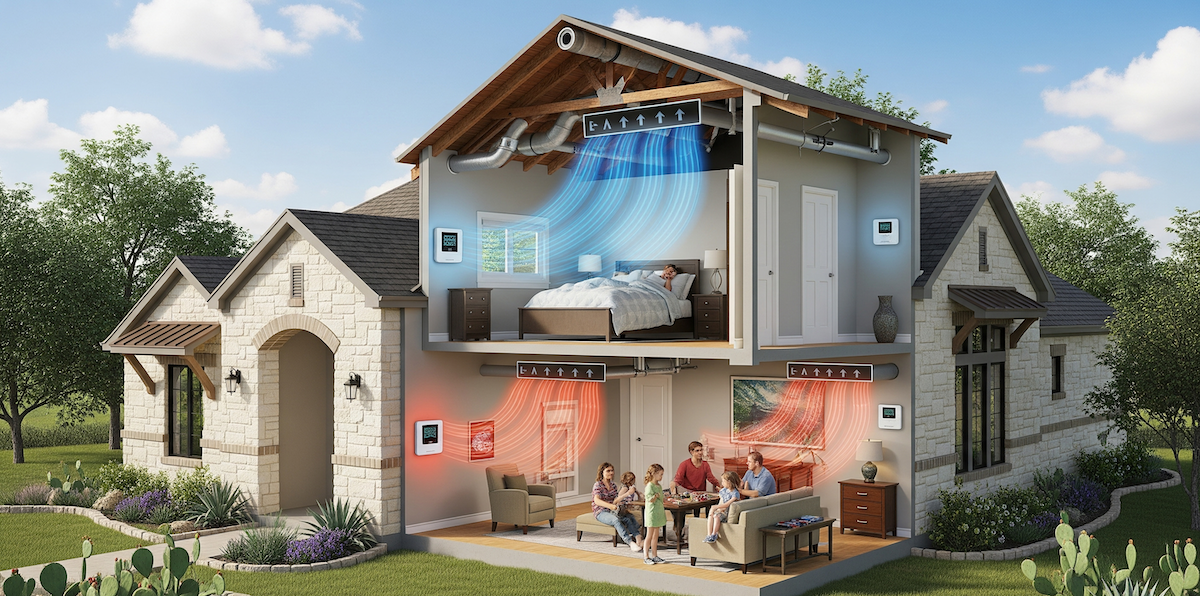
Designing a zoned HVAC system for your Central Texas home is far more intricate than it might initially appear. While the idea of individual thermostat control for different areas sounds straightforward, the technical execution is anything but simple. Several critical factors must be perfectly aligned to ensure proper functionality, peak efficiency, and consistent comfort. Getting these details wrong can lead to significant problems.
1. Balancing Airflow and Static Pressure: The Core Challenge
The main complexity in a zoned system lies in managing airflow when only some zones are active. HVAC systems are designed to move a specific volume of air. If dampers close off most zones, the system tries to push the same volume of air through fewer ducts. This creates high static pressure.
Static pressure is the resistance air encounters in ducts. Too much pressure can:
- Damage Ductwork: Strain and crack ducts over time.
- Reduce Efficiency: Force the system to work harder, wasting energy.
- Shorten HVAC Lifespan: Overstress the blower motor and other components.
- Increase Noise: Cause loud whistling or rattling.
Balancing airflow for each zone is tricky because the HVAC unit needs to adjust its air output dynamically. This is why single-stage HVAC systems are generally not suitable for zoning, as they operate at one fixed speed, always pushing the same amount of air regardless of how many zones are open.
2. The Necessity of Multi-Stage or Inverter HVAC Systems
To implement zoning effectively, a two-stage or inverter HVAC system is highly recommended. These advanced systems can adjust their capacity and air output based on demand.
- Two-Stage Systems: Operate at high capacity for whole-house cooling/heating, and at a lower capacity when only a few zones call for air. This reduces static pressure.
- Inverter Systems: Offer continuous, real-time capacity adjustment to precisely match demand. This provides optimal airflow and precise temperature control, preventing excess pressure.
Both types can “throttle back” the airflow, preventing high pressure and maintaining comfort efficiently in active zones.
3. Significant Space Requirements (Especially in Attics)
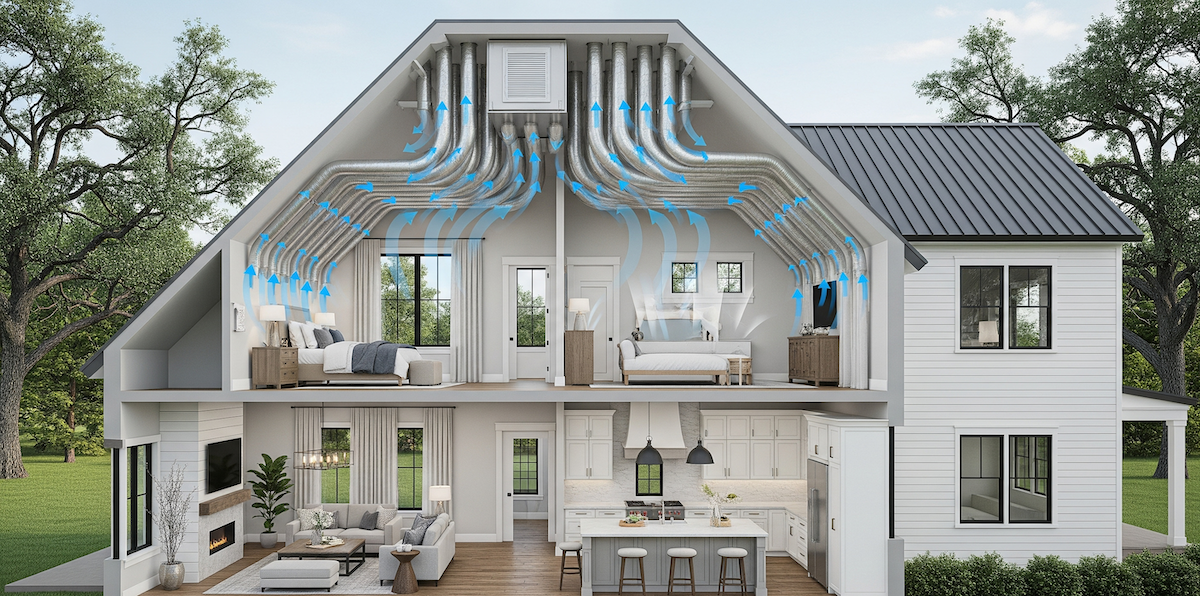
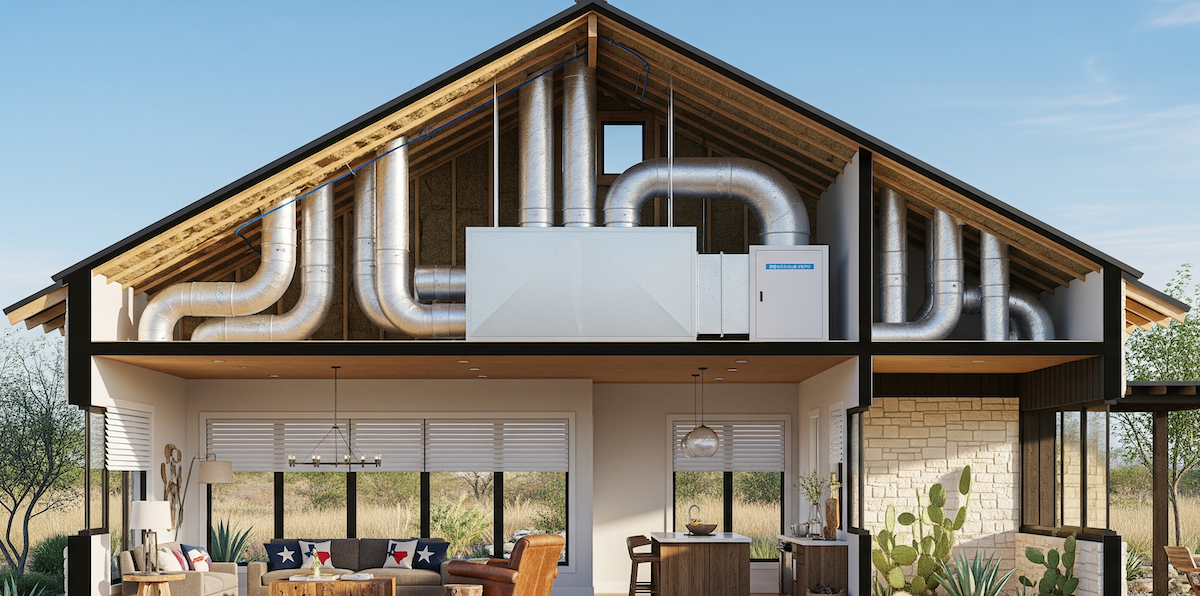
Another practical challenge for many Central Texas homes is the physical space needed. Zoning requires installing multiple thermostats and motorized dampers within the duct system. This means more equipment and potentially more complex duct routing, often in tight attic or basement spaces.
- Complex Ductwork: Designing pathways to each zone that can be opened or closed by dampers adds complexity.
- Bypass Ducts: Often necessary to relieve excess air pressure when only a few zones are active, adding more ducting.
- Motorized Damper Installation: Dampers require specific space within ducts and accessible clearance for maintenance.
Without adequate, well-organized space, designing a truly efficient and functional zoned system becomes difficult, if not impossible.
4. The Pitfalls of Single-Stage HVAC Systems with Zoning
Pairing a single-stage HVAC system with zoning is generally not advisable because it cannot adjust its output. It will always push the same amount of air, regardless of how many zones are active. This can lead to:
- Over-conditioning: Active zones become too cold or hot too quickly.
- High Static Pressure: Strains the system and ductwork.
- Inconsistent Comfort: Difficult to maintain stable temperatures.
- Excess Noise: Air forced through fewer ducts creates disruptive sounds.
This combination is inefficient, wastes energy, and can cause long-term damage to both your ductwork and HVAC unit.
5. Dialing in Static Pressure: A Professional’s Expertise
Managing static pressure is the most critical and complex aspect of a properly functioning zoned system. Too much pressure damages components, creates noise, and reduces efficiency. Balancing the system to handle varying zone demands while keeping pressure within limits is highly technical.
A professional HVAC technician must precisely calculate:
- The size and layout of each zone.
- Each zone’s specific airflow requirements.
- The HVAC system’s capacity and type.
- The optimal placement and number of dampers.
- The necessary inclusion and sizing of bypass ducts.
Getting all these interconnected elements right demands deep expertise in HVAC system design and airflow dynamics. Without this professional precision, a zoned system can underperform, waste energy, and experience premature failure.