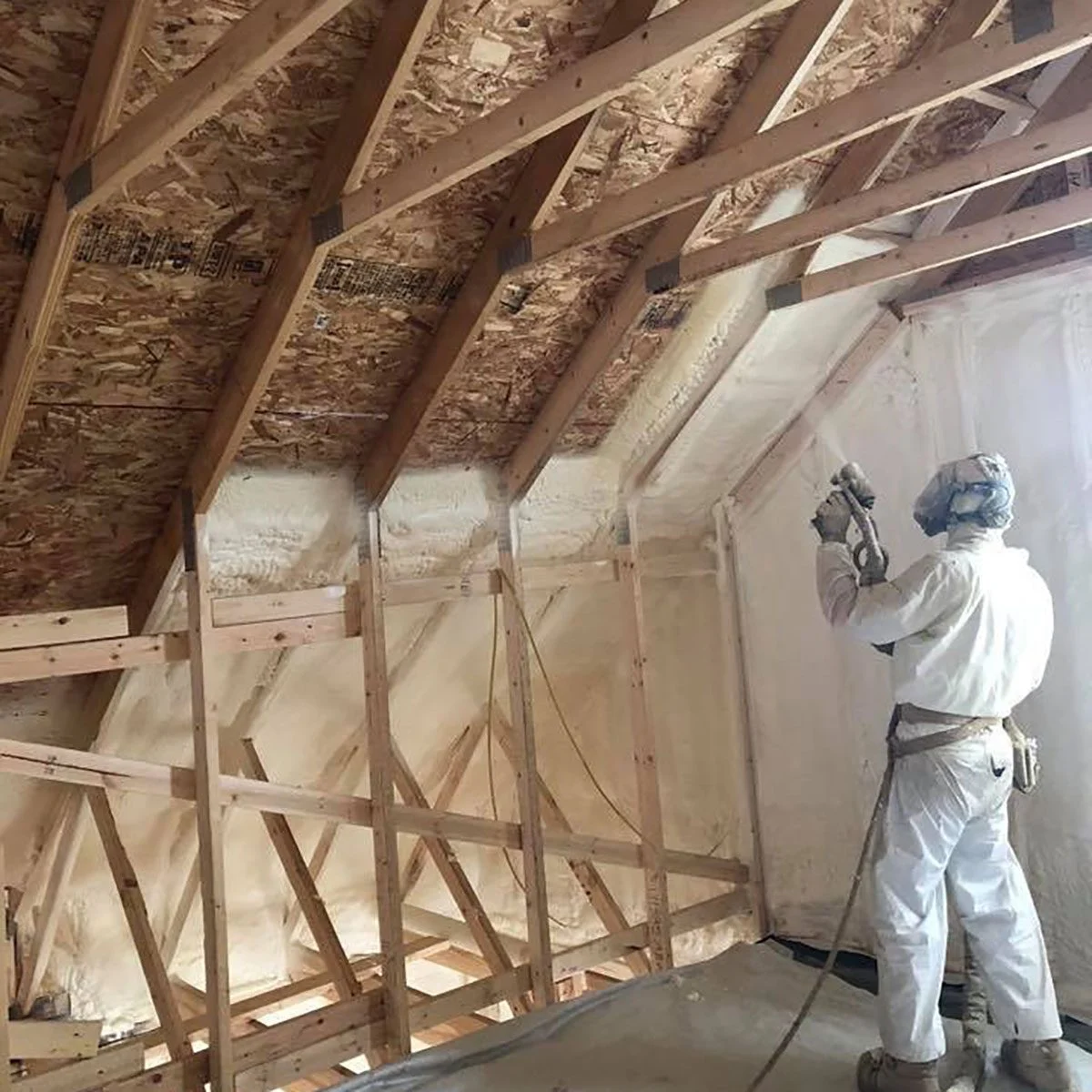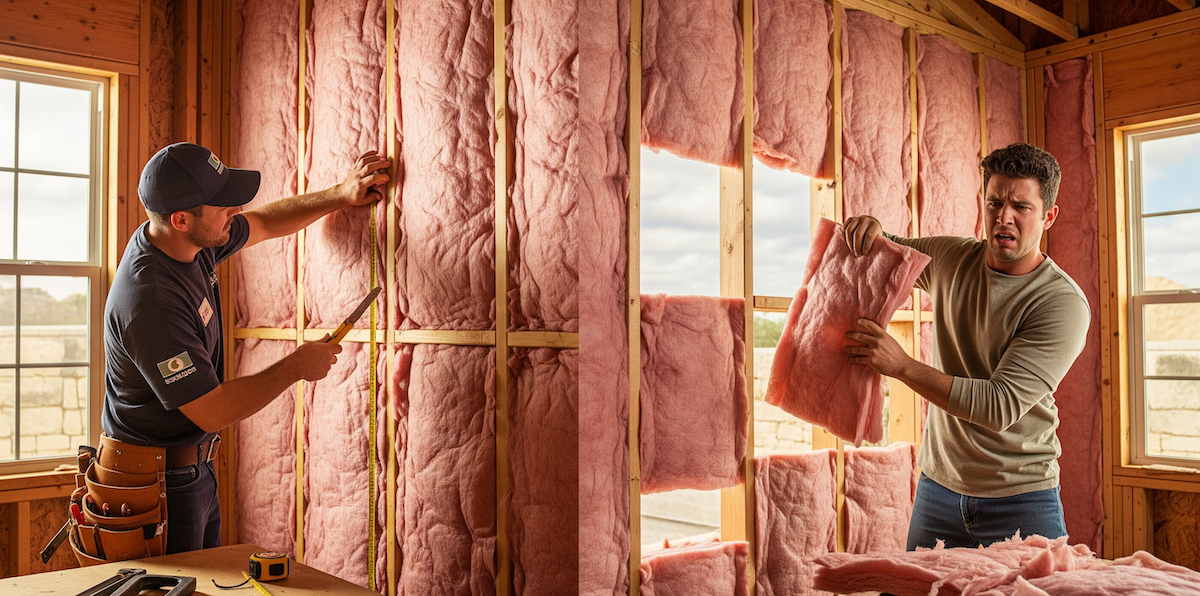


Spray foam insulation can be one of the best things that ever happened to a Texas home. Spray the roof deck, bring the attic into conditioned space, and your ductwork stops baking in a 140-degree sauna every August. Your upstairs finally feels like your downstairs. Your system runs less. It sounds like a no-brainer.
Here’s the problem: we get called into a lot of homes after the foam is already on the roof deck, the check has already cleared, and the homeowner is standing there wondering why their house feels clammy or why their energy bills barely moved. The foam did its job. Everything around the foam is the problem.
Your Gas Appliances Can’t Live in a Sealed Attic
This is the biggest one, and it’s not a gray area.
An 80% AFUE furnace – the kind installed in most Texas homes built before the mid-2000s – is an open combustion appliance. It pulls the air it needs for combustion directly from the space it sits in, and it exhausts through a B-vent or single-wall metal flue that relies on natural draft: hot gases rise, pull exhaust out, fresh air gets drawn in to replace it. The whole system depends on a continuous, unrestricted supply of air from the surrounding space.
When you spray the roof deck and seal that attic, you’ve changed that surrounding space fundamentally. There’s no longer free air exchange with the outside. That furnace is now competing with the rest of the house for a finite oxygen supply. Two things can go wrong – and both are serious:
First: oxygen depletion. The furnace starves for combustion air, incomplete combustion follows, and carbon monoxide production goes up. Significantly.
Second: backdrafting. A tight house creates negative pressure zones, especially when exhaust fans run or the blower motor kicks on. That naturally-drafting flue, which was designed for a leaky house with plenty of makeup air, can reverse flow and push combustion gases back into the conditioned space.
The same problem applies to your water heater, and this one falls through the cracks constantly. A standard atmospheric or power-vent gas water heater is the same category of appliance – open combustion, dependent on ambient air, same oxygen depletion and backdrafting risks. Because water heaters aren’t part of the HVAC conversation, they routinely get overlooked when spray foam and HVAC contractors talk through the job. Nobody claims ownership of the problem, and the homeowner doesn’t know to ask.
There’s also a hazard that’s less about air quality and more about safety. The metal flue pipe serving an 80% furnace – particularly the single-wall connector section closest to the appliance – runs hot. Code requires clearance to combustibles for exactly that reason: typically 6 inches for single-wall connector pipe, 1 inch for B-vent. When spray foam gets applied directly against that pipe, you’ve eliminated that clearance entirely. You’ve also wrapped a hot pipe in an insulating blanket, which means the pipe surface runs hotter than it would in open air because it can no longer shed heat. And once that pipe is encapsulated, nobody can inspect it, see a failing joint, or catch a problem before it becomes something worse. That flue pipe being in the attic at all is the problem – and it can’t just be foamed around.
The fix for both is the same: sealed combustion. A 90%+ furnace that pipes its own dedicated combustion air in from outside through PVC and exhausts through a sealed PVC flue, completely isolated from your house air. A direct vent water heater with the same setup – or a sealed combustion tankless unit. These appliances do not care how tight your house is, because they never touch your house air. In most jurisdictions this isn’t just best practice when placing combustion equipment in a sealed space – it’s code.
If a spray foam contractor walked your attic, saw a gas furnace and a water heater, and didn’t bring this up, that’s a problem.
Your HVAC System Was Sized for a Different House – and Your Ducts Need to Be Dealt With Before the Foam Goes On
Here’s something that almost never gets mentioned in the spray foam sales pitch: when you dramatically reduce the heat load of your home, your existing HVAC system becomes oversized for it.
Equipment sizing is based on a calculation – how much heat the house gains in summer and loses in winter, based on square footage, window area, insulation values, and how leaky the building envelope is. Your system was sized for the old version of your house. Spray foam on the roof deck changes those inputs significantly.
An oversized air conditioner short-cycles. It hits setpoint fast, shuts off, and never runs long enough to do the other half of its job: removing moisture from the air. In Central Texas, where our summer latent load can rival the sensible load, that matters. A short-cycling oversized system leaves you with a house that’s 74 degrees and 65% relative humidity. Technically cooled, genuinely miserable. Homeowners feel it and assume the foam didn’t work. The foam worked fine. The equipment is now wrong for the envelope it’s conditioning.
This is also where duct leakage stops being a simple energy problem and becomes a moisture problem – and why the ducts have to be addressed before the foam crew shows up, not after.
There’s a common misconception that duct leakage stops mattering once the attic is sealed. The logic sounds reasonable: if the ducts leak into the attic and the attic is now conditioned, you’re not losing air to the outside, so what’s the harm? The harm is moisture, and in a sealed roof-deck attic, moisture has nowhere to go. Supply ducts run cold. When warm humid air – from a poorly sealed penetration, a bath fan termination problem, or just infiltration during shoulder season – contacts those cold duct surfaces, it condenses. Do that repeatedly over a Texas summer and you’ve built a slow-motion moisture trap inside your sealed attic, with no drying potential whatsoever.
On top of that, any ductwork that’s resting directly on the roof deck or framing when the foam crew arrives is going to get encapsulated. Your leaky joints get locked in permanently. You lose all access. And the contact point between the duct and the foam creates a thermal bridge that defeats the insulation value right where the duct is coldest. Ducts need to be strapped and suspended off the deck before the foam goes on – so the foam surrounds them fully, the joints are accessible, and you’re not entombing a problem you can’t fix later.
The right sequence: test the ducts, seal the ducts, strap them off the deck, then foam. Then do a post-retrofit Manual J to find out whether your equipment is still the right size for the house you now have. In a lot of cases in our climate, a dedicated whole-home dehumidifier becomes part of the answer too.
Retrofit Spray Foam on an Existing Home is a Whole Different Animal
New construction spray foam is relatively clean. The insulation contractor works in a blank canvas, the mechanicals get designed around the sealed envelope from day one, and everyone coordinates from the start.
Retrofit spray foam on an existing home’s roof deck means working around years of accumulated decisions: open combustion appliances, ductwork with unknown leak rates, bath fans that may or may not terminate correctly, recessed lights, attic hatches, plumbing penetrations. Every one of those details has to be resolved before the foam goes on, or the performance you paid for leaks right back out – sometimes literally.
Doing it right means replacing open combustion furnaces and water heaters with sealed combustion units, testing and sealing and strapping ductwork, verifying every exhaust penetration exits the building envelope correctly, re-evaluating equipment sizing, and in most cases adding mechanical ventilation because a house that tight needs controlled fresh air exchange. That’s not a knock on spray foam – that’s just what the job actually is.
When you add up all of that, the economics look very different from the insulation bid alone. It doesn’t mean it’s not worth doing. But anyone who hands you a quote for roof deck foam without having that conversation isn’t selling you insulation – they’re selling you the easy part and leaving you to figure out the rest.
If you really want spray foam, the cleanest path is buying a house that was designed for it from the get-go.
What We Actually Recommend
We’re not anti-spray-foam. When it’s planned correctly and the whole system is designed around it, it genuinely changes what an HVAC system can do in this climate. But sealing a roof deck is a whole-home project. The envelope, the mechanical systems, the combustion appliances, and the ventilation strategy all have to move together.
Before you sign anything, have a real conversation with both your insulation contractor and your HVAC contractor – together, not separately. Ask specifically about every gas combustion appliance in the home. Ask what happens to your equipment sizing. Ask how your ductwork is going to be handled before the foam goes on. Ask how the house will breathe afterward.
The foam is the easy part. Getting everything else right is where the job actually lives.